Wednesday, February 20, 2013

Pope Benedict and the SSPX: A Chronology


Edit: for the record from pius.de, Germany’s SSPX website.


Pope Benedict resigns. A sensational report from Rome, special programs, reports, recaps: The issue is all the rage. Never since Celestine V in 1294, a pope has resigned. [Gregory XII]

The pontificate was marked by Benedict's attempt to find a canonical solution for the SSPX. Already in 2009, the pontiff had withdrawn the unjust Excommunication against the four bishops consecrated by Archbishop Lefebvre.

Unjust because Archbishop Lefebvre did not wish to split with the consecration, but wanted to save the tradition.

pius.info has summarized all the stages of the talks between Pope Benedict and the SSPX, which began in 2005

(Photo: Pope Benedict and Father Franz Schmidberger at a general audience in Rome)

2005: Bishop Fellay welcomed the election of Cardinal Ratzinger as Pope as a "ray of hope". End of August, Bishop Fellay of Benedict XVI. received in audience. The conversation showed, according to the Vatican, the "desire to arrive at a perfect communion.”

July 2007: Benedict XVI. allowed in the letter " Summorum Pontificum "that Masses may be celebrated everywhere according to the rite of 1962. This is now called "extraordinary form of the Roman Rite.”

15th December 2008: In a letter to "Ecclesia Dei" Fellay asks for the remission of the excommunication on behalf of the four bishops. He assures the recognition of papal primacy and the acceptance of the Magisterium of the Pope.

21st January 2009: By decree the Congregation for Bishops lifts the excommunication of the four Bishops Bernard Fellay, Alfonso de Gallareta, Bernard Tissier de Mallerais and Richard Williamson.

24th January 2009: The Vatican shares the remission of the excommunication in a formal communication. Almost simultaneously, a Swedish TV interview is made known in which Williamson denied the existence of gas chambers. ( Opinion of the district )

10th March 2009: Benedict XVI. wrote to all the bishops of the universal Church. In it, he admits technical mistakes of the Curia in the Williamson affair, he also reiterated its intention to integrate the SSPX back into the Catholic Church.

8th July 2009: Benedict XVI. binds the Commission "Ecclesia Dei" closely to the CDF and he invites the SSPX  to regular discussions about doctrinal issues in Rome.  The decision on the results remain subject to the Pope.

26th October 2009: At the headquarters of the Congregation in Rome beginning theological discussions in a "cordial, respectful and constructive atmosphere". For the Holy See, representatives of the CDF and the Commission "Ecclesia Dei” take part, followed by ten more meetings. For an interview,  read the interview with Bishop Fellay

14th September 2011: The Vatican puts a “Doctrinal Statement” before the leadership of the SSPX on basic beliefs of the Catholic Church for signature. In case the Brotherhood agrees, discussions on legal and structural issues of integration could be included.  ( asked the Superior General in Rome )

7th October 2011: On the Feast of the Holy  Rosary the meeting of the Superiors of the Society of St. Pius X.  begins in Albano (Rome). The 30 priests discuss the "Doctrinal Statement” presented by Rome.

12th December 2011: Father Franz Schmidberger, presented on behalf of Bishop Fellay, the answer to the "Doctrinal Statement”.

Jan. 2012: Bishop Fellay of the CDF receives a further explanatory extension letter.

16th March 2012: The Superior General meets with the Prefect of the Congregation of the Faith, Cardinal William Levada. The offer extended to the Society  "is not enough to overcome the doctrinal problems," said the written reply of the Cardinal. Rome expected a renewed statement from the SSPX in a month. (For the Vatican press Communiquée )

15th April: Renewed response from Bishop Fellay. The Press Office of the Vatican confirmed receipt of the response as follows: "The text of the response of HE Bishop Bernard Fellay, Superior General of the Priestly Fraternity of St. Pius X, who was at the meeting of March 16, 2012 called for the Offices of the Congregation is arrived yesterday, April 17, 2012. This response is checked by the dicastery and is then submitted to the judgment of the Holy See." (Rome, 18.4. 2012)

13th June: The Superior General and his first assistant (Father Pfluger) come to Rome to accept the response of the CDF. There is a two-hour meeting with the Prefect of the Congregation, Cardinal Levada. Bishop Fellay explained again his answer as “Declaration doctrinale" [declaration of faith]. During the discussions, the deep gap in teaching (Arrangement of the New Mass, controversial points of Vatican II) was addressed again. A continuation of the theological conversations is formulated as a possibility. In addition, the Superior General is presented with a concept for the recognition of the Fraternity of St. Pius X as a "personal prelature."

26th June 2012: Pope Benedict appoints a new contact for the SSPX: The Italian-American Curial Archbishop, Joseph Augustine Di Noia, was appointed Vice President for the Vatican Commission "Ecclesia Dei", and will continue on behalf of the President of "Ecclesia Dei", the prefect of the Congregation , to coordinate unification efforts with the traditionalist Society of St. Pius X .

Second July 2012: Pope appoints Bishop Gerhard Ludwig Müller to the Roman Curia, and appoints him as the successor to William Joseph Levada, Prefect of the Congregation for the Doctrine of the Faith, as well as President of the Pontifical Commission Ecclesia Dei, the Pontifical Biblical Commission and of the International Theological Commission. Thus Bishop Muller is the negotiator for talks with the SSPX.

9th - 14 July 2012: At the mother house of Ecône (Switzerland)the General Chapter of the Brotherhood is convened to the focus on the talks with Rome. The tenor is clear that the "Doctrinal Statement" can not be signed without further ado. The General Chapter shall adopt a "Declaration of Principles ".

19th July 2012: Rome recognized the receipt of the Declaration of Principles , It doesn’t see an acceptable response to the Doctrinal Clarification: "The Holy See has taken note of the Declaration, but remains in anticipation of the announced official release of the SSPX regarding the continuation of the dialogue between the Society and the Pontifical commission 'Ecclesia Dei'. " Opinion of the Vatican )

18th September: Father Schmidberger gives an interview for pius.info the current situation with Rome.

4th October 2012: Bishop Williamson is expelled from the Society. The General House justified the step in an official statement : "HE Bishop Richard Williamson has removed himself for several years from the leadership and direction of the Society, and refused to offer the respect and obedience which he owes his lawful superiors."

4th February 2013: Archbishop Müller puts pressure on the SSPX. In an interview with Die [very anti-CatholicWelt , he announces, "We will not wait forever,” 

Die Welt:. How will you continue the process of reconciliation with the estranged Pius brothers. 

Müller:.. "Easy and hard. The CDF has presented the Society with the Doctrinal Preamble which  includes nothing but the totality of the Catholic faith, where the Pope is legitimately entitled to the finally binding teaching authority.  It has been given no response so far.  We are waiting but not forever. “ [++Mueller has lied about representing the Pope’s will before.]

11th February 2013: Pope Benedict announces his resignation.

How will continue the negotiations? Will the new pontiff be open to the concerns of the Tradition?  Will he protect what Benedict has already accomplished?

The General House of the SSPX has issued statement on the resignation of the Pope and thanks him for his courage and steadfastness. The Superior General, Bishop Fellay calls for prayer for a pope who renews all things in Christ.

The Church’s Enemies Lick Their Chops at the Resignation of Pope Benedict XVI.


The singularity of Pope Benedict’s decision has awakened the greed of the anti-Rome circles.

[kreuz.net] At the Consistorium of the 11th of February 11th 2013, Pope Benedict XVI announced to the assembled Cardinals his abdication of the Petrine Office entrusted to him on April 19th 2005, as “my powers in consequence of advanced age is no longer enough, in order to execute the Petrine Office in a reasonable way”  -- it was probably the most unusual step, which one could expect from a Pope.  But perhaps not only from a German Pope,  who also saw the last days of John Paul II, and experienced the marked limitations and personal sufferings first hand.

Interpretation of Duty


This is where the German interpretation of the virtue of duty (and the understanding of their physical incapacity) on the interpretation of his predecessor, whose longtime personal secretary and present Archbishop of Krakow, Cardinal Stanislaw Dziwisz, put it clearly: “One does not climb down from the cross!”

The Holy Father had drawn only a small circle into his confidence about himself, making his decision after repeated examination of conscience before God. Even for Cardinal Angelo Sodano, the Dean of the College of Cardinals it was "a bolt from the blue," German Cardinal Meisner was "totally shocked": "The ministry is indeed a kind of fatherhood. The father indeed one remains one all of his life.”

Nevertheless, the step is the Pope as sovereign over Christendom is respected per se as legitimate - if he was right, however, we do not know.

Greed of the Anti-Clericalists

That of anti-clerical as well as inner-church anti-Roman side now tries falsely to conjure a desacralization of the papacy, which is only an expression of their political will.

So for example, one of the leading Italian Freemasons, Ernesto Galli della Loggia of all people, tries to get a foot in the door to the Vatican: "If it is possible, namely, that a pope resigns - and a centuries-old practice at the highest summit were overturned - then so other innovations are possible. Then, just as other age-old practices … may be overthrown. “

Galli speaks to the Curia, the mode of determination of the next pope: "Can not ... the election of a pope be subject to a handful of old male oligarchs ...? May the power of the Congregations still be in their own hands? Is it acceptable that there is still a boil that exists like the IOR, the Vatican Bank? “

These violent attacks by the representatives of an organization that is not suspected of being in too close proximity to Rome to show one thing: The fact that it has not yet managed to establish themselves in the Curia, and that the Vatican Bank (probably one of the few banks) is not controlled by them - one should rather look after the scandal of the Banca Monte dei Paschi di Siena and its ousted (Masonic) CEO Giuseppe Mussari and the role of Mario Draghi, the current ECB chief.

Greed of the Flower Children

In a similar horn blow the Left-Catholic anti-Roman troops are summoned, who now bring their remote corny jokes out of mothballs from the time of 1968 again: women priests, "opening oneself" for democratic structures of localism (trans. media-driven election of bishops) that the Church of Rome has to "get away from the Roman centralism” reconsidering abolishing the celibate clergy, and “allowing open, humble, compassionate, especially to the people who live differently than the equivalent officially-ecclesiastical doctrines"(remarried divorcees and Homo-erroneous).

The path of Pope Benedict XVI.
But just as the pontificate of Pope Benedict XVI. has taken the right and opposite way to the aforementioned: The recovery of the tradition of the Church (with its fiercest advocates, the SSPX), and a return to the core of the faith.

What the Church needs the least, is a self-secularization by political functionaries and transparency afforded by the media, as the gateway to the Vatican.
Link to kreuz.net...

Tuesday, February 19, 2013

Secretary of State Scolds New CDF


Edit:  Archbishop Müller attempts to go over the head of the local ordinary, the Pope, even lies about it, on behalf of his Liberation Theology friends in Peru. 

(Lima) In the Andean country of Peru, there is a rebellious university, which was deprived by Rome of the right to continue to call itself a "Catholic.”  The competent Archbishop and nominal chancellor of the academic institution withdrew the right to teach theology from the entire faculty.  After a heated session, which took place a few days ago in Rome, the Holy See insisted  that the university will continue to rebel without theologians. Cardinal Secretary of State Tarcisio Bertone had been invited to the meeting. The senior participants made the intention of the Prefect of the Congregation, Archbishop Curia Gerhard Ludwig Müller to thwart the ruling. He had tried to take the side of the Peruvian rebel party. A "gross error” for the keeper of the faith, as it is described in Rome.
Several dicastries were invited to the meeting  to consider a letter from Archbishop Müller to the Archbishop of Lima, Cardinal Juan Cipriani Thorne at the end of January. Therein the Prefect demanded an explanation as to why the Peruvian Cardinal had revoked the Church’s permission to teach theology for all the university professors of theology department.   This had notified the university authorities in December of disciplinary action by which the Holy See had withdrawn by its decree of June 2012, the Pontificia Universidad Catolica del Peru right to continue to describe themselves as “Papal" and call themselves "Catholic".

University must not describe itself as "papal" and "Catholic" - withdrawal of entire faculty's theology teaching license

The disciplinary measure which took place with the approval of Pope Benedict XVI, has lost none of its legal validity, since the university boards continue to refuse to reform the statutes and ecclesiastical regulations to implement the Apostolic Constitution Ex Corde Ecclesiae for higher education institutions.
Although the Roman decree at the time of appointment of the Bishop of Regensburg to Rome had been adopted, and the new CDF Prefect was active, according to which the rebellious professors had then turned to complain to him. According to this the withdrawal of permission to teach, it was made from "reasons of doctrine." Müller felt thus responsible, and called on the Archbishop of Lima, despite his own existing decision, to let the regular teaching  in theology continue. Müller justified this unusual step by saying that the Holy See had not yet decided the question.

CDF Prefect Müllers' interference in Lima and in the Vatican was not viewed well

The new Prefect’s interference came to nothing in Archbishop's Palace in Lima or in the other departments in Rome. Therefore, the Secretary of State Cardinal Bertone  addressed the situation at the aforementioned meeting at which the Muller's letter was canceled. It was annuled on the grounds that it had merely been a “personal" intiative by the Prefect, who had not even consulted his experts at the Congregation. Mueller also failed to send the letter through the regular channels of the Apostolic Nunciature in Lima. The Archbishop of Lima, Cardinal Cipriani had instead simply just gotten a fax. The document has ignored the canon law, the other departments, which the competent diocesan bishop for the right to grant and revoke the teaching license.
The result of the meeting was immediately sent through diplomatic channels to Peru. It can be summarized as follows: The letter from Archbishop Mueller is null and void the decision of Archbishop Cardinal Cipriani has undiminished validity.

Müller's letter null and void - “Heavy Blow" for the new Master of the Holy Office

The former Pontifical Catholic University of Peru, whose acronym of PUCP has shrunk in UP, does not have enough teachers who are willing to teach without church permission at the university.
The outcome of the meeting chaired by Cardinal Bertone was a "serious blow all around to the new Prefect, such as Andrés Beltramo Álvarez wrote for Vatican insider. To the Roman Curia  the question is whether the "new German in Rome "is really the right man for such a central post, which requires maximum discipline and allows neither improvisation nor formal or editorial errors".
Text: Giuseppe Nardi
Image: Corrispondenza Romana

Cardinal Schönborn is the Left’s Candidate for Pope


Notes on Vienna’s Archibshop -- It’s Probably Fair to Say, He’s the Candidate of the Left

 “Tell me, who praises you, and I will tell you, who you are.”  On this old saying one may think, if  the completely astonishing media praise is taken for the truth,  which at present and in view of the coming conclave is dedicated to the present Viennese Archbishop.  This can be presently gleaned:

“The tension is a concern.  Especially as Austria’s Cardinal is appearing on all short lists of the international book maker as a candidate.  … Schönborn is considered in the world Church as a proven crisis manager, as partly eager for reform and enjoyed international visibility as the editing director of the world catechism. … The more the point is, says Kirchen-Insider, in the Curia and in the Vatican to be in withdrawal, then the more it needs a still relatively young and strong Pope. Schönboren is at 67 in the best age for a Pope. Notably: Currently Italian media praise Schönborn… and among Europe’s Cardinals Schönborn is a strong name, a well balanced reformer and one, who is open to the progressive wing of the Church.”

These lauds appeared in the local left-gazette “News”, supposedly “Austrias largest news magazine”; the praise is part of an eleven page snide, insulting and anti-Church description of the abdication of Pope Benedict XVI. The praise of Schönborn is also sung with ulterior motives. For example in the also left-leaning “Süddeutschen Zeitung” (16./17.2.2013)

“… apart from that Vienna’s Archbishop Christoph Schönborn brings … much along, that might qualify him -- at 68 years of age also an adequate age and very much experience; and he’s been leading the Archdiocese of Vienna for 13 years. … He is considered one, who can clearly participate and as a guarantor, that the theme of the struggle with sexual abuse will occupy a high place. … It is also mentioned with praise in Rome, that this Cardinal, clothed like a simple priest, arrived by train at the station terminal and took his own luggage himself to the taxi.”

Or the Left boulevard sheet,“Österreich” which offers the erroneous tag line (2/13.2013): “Schönborn is the First Choice”. “Is being considered as the successor… I trust him for that, Schönborn is a very intelligent person. He has also, as he handled himself in the subject of Groer, made a name for himself. I well believe that he has a chance.”

The Left-leaning “Kurier” (2.13.2013) heading: “Schönborn is in Pole Position for New Pope” and likewise the left Italian “La Republica”, in which it says: “Among he foreign candidates Cardinal Christoph Schönborn is the first choice.” As an example of a long harmonious chorus from the Left media world, besides the praises after praise, it is seemingly clear that Schönborn is THE candidate of the Left.

What Could the Reason be?

Even in Austria, there where the view on the activities of the Archbishop of Vienna can’t be obscured by fine words and words effecting orthodoxy to Rome, Cardinal Schönborn has numerous critics among the Pope-loyal, elite of local Catholicism.

An extensive education and high intellect isn’t begrudged is allowed him even by his opponents, yet admitting all of that he doesn’t have the quality of character for his high position, or for the Papal Office.

The enthusiasm of the Left media over Schönborn is no mistake. One had already from the beginning of his time in office seen that while he quickly distanced himself publicly from his relatively conservative (and therefore unloved by the establishment) predecessor with an excessive campaign of character assassination, thereby winning the impression that under Schönborn’s direction, the Church in Austria had become thoroughly instrumentalized -- by the ruling Left and in the service of its interests.

As to the grounds for the Schönbornistic easy past in the here and now, much has been guessed. Some have come to the conclusion that he simply lacks the courage. As he was joined with the Cardinal’s purple, there appears to be no question that he has been very preoccupied.

A great Schönbornistic easy pass (to the establishment) is seen for example, according to local critics, was in the election for the Bundespresident of the Republic in 2010, as the Archbishop made gestures and endorsements, which many interpreted as electioneering for the candidate of the Left.

Or it is seen also in his acceptance expressed to the ruling majority on questions of abortion, where Cardinal Schönborn is not to be seen, for example, in any protests at abortion clinics, he also banned on several times all too vocally and all too effectively resistance (like toward his colleague Bishop Laun) against the abortion business, while he was clearly effective in the media while appearing for a Left-anarchist organized “Asylum” - legitimizing by his visit, the occupation of the Votivkirche in Vienna.

Whether it applies to the “artwork” of a Bolshevik “artist” suddenly put in the church space for exhibition; whether it is for the state recognition of homosexual concubinage, which in no way has ben opposed by him, whether it’s about the public and seemingly excessive payments of ecclesiastical money to the so-called “victims” of ecclesiastical “abuse” or for high ecclesiastical endorsements for Leftist and Liberal politicians, while at the same time Conservatice clerics must fear Archepiscopal criticism or discipline -- Schönborn’s effect on increasingly wider circles is dubious.

Also the countless and truly ostentatiously schonbornistic gestures of piety (Carrying luggage from the train station) may not convince, gives one up and down the impression that they could belong to the subtle medium of an apparently very efficient career plan.

If the Church is proven to be done a good service by a Schönborn Papacy, one may in any case well doubt. From the media’s praise, which takes Schönborn’s side, there are indeed certain circles having a great interest.

We would like would like to give a selection here of critical voices together, which have accompanied Schönborn’s effect in Vienna in the last 13 years. A picture can be formed for one’s self. We will see that this collection will be continually increased.

Link to kreuz.net….

Sunday, February 17, 2013

Seewald: Vatileaks Isn’t the Reason for the Pope’s Resignation

Munich (kath.net/KNA)  The so-called “Vatileaks” affair was clearly not the reason for the resignation of Pope Benedict XVI.  This is according to the news magazine “Focus” on Saturday in reference to the German journalist Peter Seewald.  The betrayal neither threw the Pope off the rails, nor made him weary of his office.  This is what the Pontifex explained to Seewald during a one and a half hour interview in the summer residence in Castel Gandolfo in August.

The “Vatileaks” affair concerned the theft of confidential documents from the apartment of the Pope.  At the beginning of October found the butler of the Pope since 2006, a Paolo Gabriel guilty and condemned him to 18 months imprisonment.  Shortly before Christmas, Benedict XVI forgave his former assistant.

Seewald reported in Focus over several talks with the Pope.  He said on his glimpse on the betrayal of his Ex-butler:  It wasn’t so, “that I had fallen in any way under despair or world weariness.  It was simply incomprehensible.  Also when I view the person, I can not understand what he can have promised.  I can’t penetrate this psychology,” said the Pope according to Seewald.

As the author of the Pope’s Interview Book “Light of the World” wrote in Focus, it was important to the Pope, that in the deliberation of the case “in the Vatican, the independence of justice was maintained, that the monarch doesn’t say, now take him away.”

Seewald reports he had never seen Benedict before so exhausted and dejected.  With his last strength the German Pope brought the third volume of his Jesus work to and end. “My last book”, the Pope said of it.

The last meeting in the Vatican, says Seewald, was a good ten weeks before.  As to Seewald’s question “What more do you expect from your pontificate?”,  the Pontifex answered:  “From me?  Nothing much more.  I am really an old man, the power is gone.  I think that what I’ve done is sufficient.”  Seewald has written a biography about the Pope and met him for this in the last months several times.

Link to kath.net...

Bishop Fellay Keeps Open the Doors of Reconciliation and Restoration


Edit: the following is the interview translated at the DICI site in English from the Nouvelles de France site.  Bishop Fellay makes some salient points about the struggle for tradition and opens the doors toward reconciliation and the continued restoration of all things unto Christ.  Of course, contrary to many parties both within the official Church, Her media, and those outside of Her embrace, this reconciliation is still very much alive and developing:
Your Excellency, would you appreciate it if the last major act of Benedict XVI’s pontificate could be the reintegration of the Society of St. Pius X?
For a moment I thought that, with his resignation, Benedict XVI would perhaps make a final gesture in our favor as Pope. That being said, I have a hard time seeing how he could do so. We will probably have to wait for the next Pope. I will even go so far as to say, at the risk of surprising you, that the Church has more important problems than the Society of St. Pius X, and in a way, it is by resolving these problems that the problem of the Society will be solved.
Some say that you wish Rome to recognize that the ordinary rite is illicit; can you tell us more on this point?
We know very well that it is very difficult to ask the authorities to condemn the new mass. In reality, if what needs to be corrected were corrected, it would already be a big step.
How?
It can be done by an instruction from the Congregation for the Divine Cult and the Discipline of the Sacraments. It’s not that complicated, really. I think that important changes need to be made because of the serious and dangerous deficiencies that make this rite condemnable. The Church could very well make these important corrections without losing face or undermining her authority. But at present, I am aware of the opposition from a number of bishops to the Pope’s legitimate request that the translation in the Canon of the Mass of “pro multis” by “for all” be corrected and replaced by “for many”, since the former translation which can be found in several languages is false.
Would you like to say anything about Vatican Council II?
As far as Vatican II is concerned, just like for the Mass, we believe that it is necessary to clarify and correct a certain number of points that are either erroneous or lead to error. That being said, we do not expect Rome to condemn Vatican II any time soon. She can recall the Truth and discretely correct the errors, while preserving her authority. Nonetheless, we think that the Society contributes to the Lord’s edifice by denouncing certain disputed points.
Concretely speaking, you know that your demands will not be answered overnight.
Absolutely, but little by little they eventually will be, I think. And the time will come when the situation will become acceptable and we will be able to agree, even if that does not seem to be the case today.
You met with Benedict XVI in the first months of his pontificate; can you tell us what your impression of him was at that time?
I can say that I met with a Pope who had a sincere desire to bring about the unity of the Church, even if we were not able to agree. But I assure you that I pray for him every day.
In your opinion, what was the most important act of his pontificate?
I think that the most important act was without any doubt the publication of the Motu Proprio Summorum Pontificum which grants to priests everywhere in the world the freedom to celebrate the traditional Mass. Might I add that he acted with courage, for there was opposition. And I think that this act will bear very positive fruits in the long run.
(Sources: Nouvelles de France – DICI#270, Feb. 15, 2013)

Saturday, February 16, 2013

Cardinal [?] Joseph Ratzinger in the Cloister --- ++Gänswein Will Remain at His Side


(Vatican) Monsignor Georg Gänswein, the personal secretary of Pope Benedict XVI. will remain at his side after the resignation of the Pope, but retain the office of Prefect of the Pontifical Household. Thus from February 28th at 8pm  he will be on the side of the former Pope and at the same time the new Pope both. This unusual constellation was announced this morning by Vatican spokesman Father Federico Lombardi.
"Don George", as the secretary of the Pope is commonly referred to since the beginning of the Pontificate, will retire, according to the head of the "Press Room” to Castel Gandolfo on the afternoon of 28 February after the resignation of Cardinal Joseph Ratzinger. Them there are also the four Memores the four women who will follow him, who led the papal household. Benedict XVI, then Cardinal Ratzinger [Not sure about the title], will stay until the end of the conclave in the papal summer residence, and then return to the Mater Ecclesiae convent in the Vatican. The necessary renovations were already complete in November 2012, in place for the former Pope to occupy an apartment next to the cloister of the monastery. Gänswein will then live in the monastery with the former pope. A decision on the Vatikanist Andrea Tornielli already on 12th Reported in February.
Mater Ecclesiae convent future residence of Cardinal Joseph RatziingerThe personal secretary of the reigning Pope was Benedict XVI. was only appointed the last 7th of December as Archbishop and Prefect of the Pontifical Household. At a time when the Pope had already decided to resign. According to L'Osservatore Romano  the intention to resign matured in Pope Benedict after the trip to Mexico and Cuba in March 2012. A decision-making process in which a nocturnal fall in the Mexican city of  Leon also may have played a role, which has been confirmed today by Father Lombardi. Gänswein received his ordination by the Pope personally during Epiphany.
The Prefect of the Papal Household has the task of organizing the public life of the Pope, especially the hearings and meetings of the Holy Father. From 1998 until the fall of 2012 Americans Archbishop James Michael Harvey has held that title. In November 2012 and since then Pope Benedict XVI.  has created him a Cardinal Archpriest of the Basilica of St. Paul Outside the Walls. With the appointment of Msgr Gänswein, the new prefect is the right hand of the pope resigning, which remains at his side, will continue to play a key position at the side of the new pope. A situation which seems to defy the Vatican statements that Benedict XVI. from the moment when he will be Cardinal Ratzinger, would exert no influence on the conclave and the future Pope.
Father Federico Lombardi explained that the future dual function of Curial Archbishop Gänswein alongside a foregone and a reigning pope so that the position of Prefect of the Papal Household is "No government official"  and has nothing to do with "substantive decisions". The Office had to do with the implementation of the papal audiences and meetings, not with the decision of who will be presented to the Pope and not. Therefore, there would be "no problem because of the close bond" the prefect to the predecessor of the future pope.
The Mater Ecclesiae convent of the Leonine Wall in the Vatican Gardens was founded by Pope John Paul II and in 1994 on inaugurated on the 13th anniversary of the attack against him.  It was the wish of the Pope to have a convent in the Vatican for their special Apostleship of Prayer prayig for the reigning pope and the Roman Curia. In the five-year cycle the orders and convent will change. Since 2009, a Salesian convent lives in the monastery. The sisters do needle, embroidery work for the papal household and supply these with fruits and vegetables from the monastery garden.
Text: Giuseppe Nardi
Image: Vatican Insider

Link to Katholisches...

Words of Praise from Russian Orthodox Leaders for Benedict XVI

Kyrill I: In the “difficult situation”, in which western Christianity today finds itself, the Pope “courageously” defends the positions and moral values of his church.

Moscow(kath.net/KNA) The Head of the Russian Orthodox Church, Patriarch Kyrill I, has recently found words of praise for Pope Benedict XVI.. In the “difficult situation” in which western Christianity finds itself, the Pope has defended “courageously” the positions and moral values of his church said Kyrill II according to church reports of Sunday evening during a meeting with the new Russian Ambassador to the Holy See, Alexander Awdrejew. Without these positions the Church would not be able to endure any longer and be transformed into a “mixture of various Christian organizations”.

The Patriarch stresses at the same time the stand points of the Russian Orthodox and the Catholic Church agree in the “most significant questions of the past”. Both churches should continue to work together, so that the Christian message as much in the East as also in the West will be convincingly preached. Kremlin Chief, Vladimir Putin had named the former Russian Culture Minister Awdejew as Ambassador of to the Holy See in January.

Since the election of Benedict XVI., the diplomatic and ecumenical relations between the Russian Orthodox and Catholic Church have been remarkably improved. According to the political change of 1989, the Moscow Patriarchate reproached Rome for building of Catholic church structures in the states of the earlier Soviet Union, to serve to proselytize their faithful. The Patriarchate consider the Federation States as the canonical territory of Orthodoxy.

 Link to kath.net…


Also a Russian Orthodox theologian has his own words of praise for Pope Benedict:

Russian scholar praises Benedict XVI, slams John Paul II

Moscow, February 12, Interfax - Outgoing Pope Benedict XVI "has been able to strengthen the Catholic Church and improve relations with" the Russian Orthodox Church, a Russian religious scholar said.

"His decision to resign deserves respect. He has been a powerful leader, and would be able to continue his mission successfully if it weren't for his age," Roman Silantyev told Interfax-Religion.

Benedict took charge of what was "a church that had been seriously weakend by his predecessor," Silantyev said.

"John Paul II wanted to be liked by everyone, and as a result he did huge harm to the Catholics, turning millions of people away from his Church. His tenure saw mass-scale closures or conversions of Catholic Churches in Europe. Seminaries with histories spanning many centuries lost their students, and orphanages in Third World countries became the main source of new clergy," the scholar said.

During Benedict's tenure, "the useless 'thrust toward the East' [alleged proselytism by Uniates], which was taking up huge resources, has come to an end, there has been an improvement in relations with the Russian Orthodox Church, which has proved to be the Vatican's main ally in asserting the Christian way of life in the European Union," Silantyev said.

Benedict "hasn't had the idee fixe of coming to Moscow because he has repeatedly met with the incumbent Patriarch of Moscow and all Russia anyway," he said.

"It appears to be most likely that an Italian cardinal will be elected to this post," Silantyev said.

Friday, February 15, 2013

Papal Electors and the “Old” Mass -- an Initial Preview on the Conclave

(Rome) During the last days of the Pontificate of Pope Benedict XVI. a glance has already been made at the possible successors of Christ’s representative on Earth, successor of the successor of the Prince of the Apostles, Peter and Bishop of Rome.  According to Church law any baptized Catholic man can be elected.  It follows from ecclesiastical praxis that the future Pope in any case is selected from the circle of the Conclave participants.  At this point a glance should be cast on each of the Cardinals, who belong to the Conclave and have already celebrated the Holy Sacrifice of the Mass in the Extraordinary Form of the Roman Rite or have taken part in such a celebration.  Of 117 Cardinals, who will be closed in the Sixtine Chapel, this applies to 22 Cardinals.  Almost every fifth member of the papal voters have had direct contact with the traditional form of the Roman Rite through the Motu proprio Summorum Pontificum.  The longest serving Cardinals among them is the Mexican, Juan Cardinal Sandoval Iniguez, emeritus Archbishop of Guadelajara.  He was already in 1994, accepted in the College of Cardinals. Among the the Cardinals declared in last two extraordinary Consistoriums of the past year there are none, who celebrate the “Old Mass” or have assisted at one.

Further Cardinals, among howm two, are considered “papabili”, Marc Cardinal Ouellet, the emeritus Archbishop of Quebec, the Primate of Canada, and since 2010 Prefect of the Bishops’ Congregation to the Roman Curia (Cardinal since 2003), and Timothy Cardinal Dolan, since 2009 Archbishop of New York and since 2010, the President of the American Bishops’ Conference (Cardinal since 2012), have enacted the Motu proprio Summorum Pontificum in their own areas of jurisdiction.

The following is a list of the Papal electors who have already celebrated the Holy Sacrifice of the Mass in the traditional, Tridentine Rite or have assisted at such:


Albert Malcolm Kardinal Ranjith Patabendige Don, born 1947, 2005-2009 Secretary of the Kongregation for Liturgy and the Order of the Sacramento, Archbishop of Colombo, Cardinal since 2010

Keith Michael Patrick Cardinal O‘Brien, born 1938, Archbishop of Saint Andrews and Edinburgh and Primate of Scotland, Cardinal since 2003

Franc Cardinal Rodé, Lazarist, born 1934, em. Archbishop of Laibach, em. Prefect of the Congregation for the Institutes Consecrated Life and for Societies of Apostolic Life, Cardinal since 2006

John Cardinal Tong Hon, born 1939, Bishop of Hong Kong, Cardinal since 2012

Antonio Cardinal Cañizares Llovera, Jahrgang 1945, em. Archbishop of Toledo und Primate of Spain, Prefect for the  Congregation for Liturgy and the Order of the Sacraments, Cardinal since 2006

Cardinal Lluís Martínez Sistach i, born in 1937, the Archbishop of Barcelona, ​​Cardinal since 2007

Cardinal Raymond Leo Burke, born in 1948, em. Archbishop of Saint Louis, Prefect of the Apostolic Signatura, Cardinal since 2010

Francis Eugene Cardinal George, Oblate of immaculate Virgin Mary, born in 1937, Archbishop of Chicago, Cardinal since 1998

William Joseph Levada, born in 1936, em. Archbishop of San Francisco, em. Prefect of the CDF, Cardinal since 2006

Sean Patrick Cardinal O'Malley, Capuchin, born in 1947, Archbishop of Boston, Cardinal since 2006

Donald William Cardinal Wuerl, born in 1940, the Archbishop of Washington, Cardinal since 2010

Philippe Xavier Ignace Cardinal Barbarin, born in 1950, Archbishop of Lyon and Primate of the Gauls, Cardinal since 2003

Cardinal Jean-Pierre Ricard, born in 1944, Archbishop of Bordeaux, Cardinal since 2006

André Cardinal Armand Vingt-Trois, born in 1942, archbishop of Paris, and Primate of France, Cardinal from 2007

Ennio Cardinal Antonelli, born in 1936, em. Archbishop of Florence, em. President of the Pontifical Council for the Family, Cardinal since 2003

Angelo Cardinal Bagnasco, born in 1943, Archbishop of Genoa, Cardinal since 2007

Carlo Cardinal Caffarra, born in 1938, Archbishop of Bologna, Cardinal since 2006

Velasio Cardinal De Paolis, was born in 1935, the Congregation of the Missionaries of St. Charles Borromeo, em. Prefect for the Economic Affairs of the Holy See, Cardinal since 2010

Angelo Cardinal Scola, born in 1941, em. Patriarch of Venice, archbishop of Milan, Cardinal since 2003

Juan Cardinal Sandoval Iñiguez, born in 1933, em. Archbishop of Gudalajara, Cardinal since 1994

Stanislaw Cardinal Dziwisz, born in 1939, Archbishop of Krakow, Cardinal since 2006

Kazimierez Cardinal Nycz, born in 1950, archbishop of Warsaw, Cardinal since 2010

Link to Katholisches...

900 Years of Chivalry

Edit: this from nobility.org on one of the most venerable charitable and military organization now in existence.

by Raymond Drake
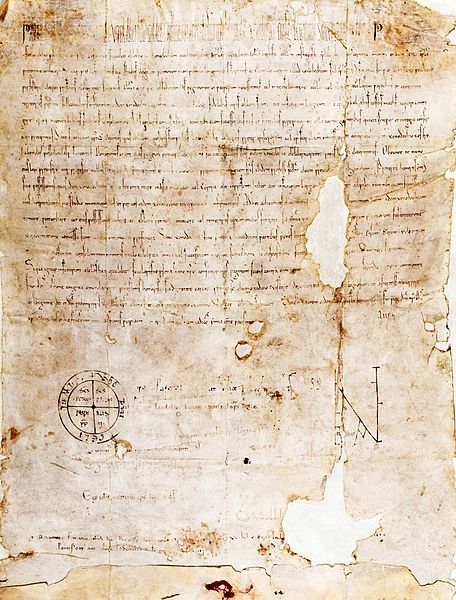
Nine hundred years ago, on February 15, 1113, Pope Paschal II issued the bull Pie Postulatio Voluntatis approving a hospitaller religious order that today is Christendom’s oldest order of chivalry: The Sovereign Military Hospitaller Order of St. John of Jerusalem of Rhodes and of Malta. The Pope made the order independent from all temporal power and dependent directly on the Holy See.
 Papal bull Pie Postulatio Voluntatis confirming the foundation of the Knights of Malta
Papal bull Pie Postulatio Voluntatis confirming the foundation of the Knights of Malta
It all began a year or so after the 1099 conquest of Jerusalem by Godfrey of Bouillon and the First Crusade, when Blessed Gerard Tum (aka Thom, Tenque) was made provost of the Men’s Hospice in Jerusalem. Little is known of his ancestry and early years. Some say he hailed from Amalfi, Italy, while others claim him for Provence, in France. In Jerusalem, Brother Gerard recruited the Order’s first members, and later secured papal approval for it.
In 1118, Blessed Gerard was succeeded in the Order’s government by Raymond du Puy de Provence. It was under du Puy that the Order, which had been dedicated at its founding to the nursing of the sick, added its military wing to provide armed escort to pilgrims coming to and returning from the Holy Places. The ever-present Muslim menace against the Crusaders’ small kingdom in the Holy Land would turn the Order into a formidable fighting force. It was also Raymond du Puy who chose the white eight-pointed cross atop a black surcoat as the Order’s symbol.

Thursday, February 14, 2013

Roberto Mattei: It Would be Unwise to Consider This Pontificate “Concluded"


by Roberto di Mattei

(February 13, 2013,www.conciliovaticanosecondo.it)

On February 11, the Feast of Our Lady of Lourdes, the Holy Father Benedict XVI announced to the Consistory of Cardinals and to the whole world his decision to resign from the papacy. The announcement was greeted by the cardinals “almost in disbelief”, “with a sense of bewilderment”, “like a bolt from the blue”, according to the remarks addressed to the Pope immediately afterward by Cardinal Angelo Sodano, Dean of the College of Cardinals.
If the bewilderment of the cardinals was so great, one can imagine how intense the disorientation of the faithful is these days, especially those who have always regarded Benedict XVI as a reference point and now feel somehow “orphaned”, if not downright abandoned, in view of the serious difficulties that the Church faces at the present hour.

Yet the possibility that a Pope could renounce the papal throne was not entirely unexpected. The [then] President of the German Bishops’ Conference, Karl Lehmann, and the [then] Primate of Belgium, Godfried Danneels, had put forward the idea of the “resignation” of John Paul II, when his health had deteriorated. Cardinal Ratzinger, in his 2010 book-length interview Light of the World, had told the German journalist Peter Seewald that if a pope “realizes that he is no longer physically, psychologically, and spiritually capable of handling the duties of his office, then he has a right and, under some circumstances, also an obligation to resign” (p. 30). In 2010, then, fifty Spanish theologians had expressed their support for the Open Letter to the bishops of the whole world by the Swiss theologian Hans Küng with these words:
We believe that the pontificate of Benedict XVI is worn out. The Pope has neither the vigor nor the intellectual acumen to respond adequately to the serious and urgent problems which the Catholic Church finds that she must face. We think therefore, with due respect for his person, that he ought to tender his resignation from his office.
Continue at SSPX US District Page...

Wednesday, February 13, 2013

Cardinal Bertone is Camerlengo: The 117 Cardinals Who Will Elect the 266th Pope


Edit: unless something else unprecedented happens.  Cardinal Kasper will also vote. 
(Vatican) after the resignation of Pope Benedict XVI.  on the evening of February 28th, the next Conclave will be convened. This must be in accordance with current electoral rules must meet between the 15th and 20th day from the time at which the Holy See becomes vacant, to elect the new pontiff.
The Dean of the College of Cardinals will celebrate Holy Mass with the assembled cardinals in St. Peter's Basilica.  The Cardinal Dean since 2005, Cardinal Angelo Sodano,  is no longer eligible to vote because of his age. In 2005 Joseph Cardinal Ratzinger was Dean of the College of Cardinals. After Mass, the voting cardinals will make an invocation of the Holy Spirit in the Sistine Chapel, where they are sequestered until the election of the new Pope.
In the coming conclave 117 cardinals will be eligible to vote, which will be the highest-ranking official will be Tarcisio Cardinal Pietro Bertone Evasio. Since neither the Dean nor his deputy are members retired from the conclave, they will head the oldest and most senior among the elected cardinals of the conclave, which will be Cardinal Giovanni Battista Re, the emeritus Prefect of the Congregation for Bishops,  the eldest among the Cardinals of the conclave who is among the eldest of the member bishops of the conclave. The College of Cardinals is divided into three grades, into cardinal-bishops, cardinal-priests and cardinal-deacons.
The conclave will be between the 15th and 20th Begin March. According to Article 33 of the Apostolic Constitution  Universi Domici Gregis of Pope John Paul II in 1996 it allows the German Cardinal Walter Kasper, the oldest of the electors to still participate in the conclave. According to the original rules of order by Pope Paul VI., only those cardinals are eligible to vote who have  not completed their 80th year at the beginning of the conclave. Cardinal Kasper is 80 on 5 March.
From the German-speaking countries, there are seven Cardinals attending the conclave, Cardinal Kasper (President Emeritus of the Pontifical Council for Promoting Christian Unity), Cardinal Meisner (archbishop of Cologne), Cardinal Lehmann (Bishop of Mainz), Cardinal Schönborn (Archbishop of Vienna ), Cardinal Koch (President of the Pontifical Council for Promoting Christian Unity), Cardinal Marx (Archbishop of Munich-Freising), Woelki Cardinal (Archbishop of Berlin).
67 of the 116 voting cardinals were elevated by Pope Benedict XVI. to the rank of Cardinal. 24 of them in 2012 alone, with two extraordinary consistories.

Camerlengo : Tarcisio Pietro Evasio Bertone, S.D.B., age : 78.
Cardinal Proto-Deacon: Jean-Louis Pierre Tauran, age: 69.9
The Other Participants of the Conclave:
Giovanni Battista Re, Kardinal-Bischof von Sabina-Poggio Mirteto, age: 79.1
Tarcisio Pietro Evasio Bertone, S.D.B., Cardinal Bishop of Frascati, age: 78.3
Antonios Naguib, emeritierter Patriarch von Alexandria (Copt), Egypt, age: 78.0
Béchara Boutros Raï, O.M.M., Patriarch von Antioch (Maroniten), Lebanon, age: 73.1
Godfried Danneels, emeritus Archbishop of Mechelen-Brüssel, Belgien, Alter: 79.8
Joachim Meisner, Erzbischof Cologne, Deutschland, age: 79.2
Nicolás de Jesús López Rodríguez, Archbishop  of Santo Domingo, Dominican Republic, age: 76.4
Roger Michael Mahony, emeritus  Archbishop of Los Angeles, California, USA, age: 77.1
Jaime Lucas Ortega y Alamino, Archbishop of San Cristobal de la Havana, Cuba, age: 76.4
Julius Riyadi Darmaatmadja, S.J.,  emeritus Archbishop of Jakarta, Indonesia, age: 78.2
Jean-Claude Turcotte, emeritus Archbishop of Montréal, Québec, Canada, age: 76.7
Vinko Puljic, Archbishop of Vrhbosna (Sarajewo), Bosnia and Herzegovina, age: 67.5
Juan Sandoval Íñiguez, Archbishop of Guadalajara, Jalisco, Mexico, age : 80.0
Antonio María Rouco Varela, Archbishop of Madrid, Spain, age: 76.6
Dionigi Tettamanzi, emeritus Archbishop of Milan, Italy, age: 79.0
Polycarp Pengo, Erzbischof  of Dar-es-Salaam, Tansania, age: 68.6
Christoph Schönborn, O.P., Archbishop of Vienna, Austria, age: 68.2
Norberto Rivera Carrera, Archbishop of  México, State, age: 70.8
Francis Eugene George, O.M.I., Archbishop of Chicago, Illinois, USA, age: 76.2
Zenon Grocholewski, Prefect of the Congregation for Catholic Education, age: 73.4
Crescenzio Sepe, Archbishop of Naples, Italy, age: 69.8
Ivan Dias, emeritierter Präfekt der Kongregation für die Evangelisierung der Völker, age: 76.9
Geraldo Majella Agnelo, emeritus Archbishop of São Salvador da Bahia, Brazil, age: 79.4
Audrys Juozas Bačkis, Archbishop of Vilnius, Litauen, age: 76.1
Francisco Javier Errázuriz Ossa, emeritus Archbishop of Santiago de Chile, age: 79.5
Julio Terrazas Sandoval, C.SS.R., Archbishop of Santa Cruz de la Sierra, Bolivia, age: 77.0
Wilfrid Fox Napier, O.F.M., Archbishop of Durban, Südafrika, age: 72.0
Oscar Andrés Rodríguez Maradiaga, S.D.B., Archbishop of Tegucigalpa, Honduras, age: 70.2
Juan Luis Cipriani Thorne,  Archbishop of Lima, Peru, age: 69.2
Cláudio Hummes, O.F.M., emeritus Prefect of the Congregation of Clergy, age: 78.6
Jorge Mario Bergoglio, S.J., Archbishop of Buenos Aires, Argentinien, age: 76.2
José da Cruz Policarpo, Patriarch of Lisbon, Portugal, age: 77.1
Severino Poletto, emeritierter Archbishop of  Turin, Italy, Alter: 80.0
Karl Lehmann, Bishop von Mainz, Deutschland, age: 76.8
Angelo Scola, Archbishop of Milan, Italien, age: 71.4
Anthony Olubunmi Okogie, emeritierter Erzbischof von Lagos, Nigeria, Alter: 76.8
Gabriel Zubeir Wako, Archbishop of Khartum, Sudan, age: 72.1
Carlos Amigo Vallejo, O.F.M., emeritus Archbishop of Sevilla, Spain, age: 78.6
Justin Francis Rigali, emeritus Archbishop of Philadelphia, Pennsylvania, USA, age: 77.9
Keith Michael Patrick O’Brien, Archbishop of Saint Andrews and Edinburgh, Schottland, age: 75.0
Ennio Antonelli, emeritus President for the Council on the Family, age: 76.3
Peter Kodwo Appiah Turkson, President of the Council for Peace and Justice, age: 64.4
Telesphore Placidus Toppo, Erzbischof von Ranchi, Indien, Alter: 73.4
George Pell, Archbishop of Sydney, Australien, age: 71.8
Josip Bozanić, Archbishop of Zagreb, Kroatien, age: 64.0
Jean-Baptiste Pham Minh Mân, Archbishop of Thành-Phô Hô Chí Minh, Vietnam, Alter: 79.0
Philippe Xavier Ignace Barbarin, Archbishop of Lyon, Frankreich, age: 62.4
Péter Erdõ,  Archbishop of Esztergom-Budapest, Ungarn, age: 60.7
Marc Ouellet, P.S.S., Prefect of the Bishop’s Congregation, age: 68.8
Agostino Vallini, Vicar General of the Diocese of Rome, Italy, age: 72.9
Jorge Liberato Urosa Savino, Archbishop of Caracas, Venezuela, age: 70.6
Jean-Pierre Bernard Ricard, Archbishop of Bordeaux, Frankreich,age: 68.5
Antonio Cañizares Llovera, Prefect of the Congregation of Liturgy and the Order of the Sacraments, age: 67.4
Sean Patrick O’Malley, O.F.M. Cap.,  Archbishop of Boston, Massachusetts, USA, age: 68.7
Stanisław Dziwisz, Erzbischof von Krakau, Polen, Alter: 73.9
Carlo Caffarra, Archbishop of Bologna, Italien, age: 74.8
Seán Baptist Brady, Archbishop of Armagh, Irland, age: 73.6
Lluís Martínez Sistach, Archbishop of Barcelona, Spain, age: 75.9
André Armand Vingt-Trois, Archbishop of Paris, France, age: 70.4
Angelo Bagnasco, Archbishop Genua, Italy, age: 70.2
Théodore-Adrien Sarr, Archbishop of Dakar, Senegal, age: 76.3
Oswald Gracias, Archbishop of Bombay, India, age: 68.2
José Francisco Robles Ortega, Archibshop of Guadalajara, Jalisco, Mexiko, age: 64.0
Daniel Nicholas DiNardo, Archbishop of Galveston-Houston, Texas, USA, age: 63.8
Odilo Pedro Scherer, Archbishop of São Paulo, Brazil, age: 63.5
John Njue, Archbishop of Nairobi, Kenia, Alter: 69.2
Raúl Eduardo Vela Chiriboga, Emeritus Archbishop of Quito, Ecuador, age: 79.2
Laurent Monsengwo Pasinya, Archbishop of Kinshasa, Democratic Republic of Congo, age: 73.4
Paolo Romeo, Archbishop of Palermo, Italien, age: 75.1
Donald William Wuerl, Archbishop of  Washington, District of Columbia, USA, Alter: 72.3
Raymundo Damasceno Assis, Archbishop of Aparecida, Brazil, age: 76.1
Kazimierz Nycz, Archbishop of Warsaw, Poland, age: 63.1
Albert Malcolm Ranjith Patabendige Don, Erzbischof von Colombo, Sri Lanka, age: 65.3
Reinhard Marx, Archbishop of Munich und Freising, Deutschland, age: 59.5
George Alencherry, Grand Archbishop of Ernakulam-Angamaly (Syro-Malabar), India, age: 67.9
Thomas Christopher Collins, Archbishop of Toronto, Ontario, Canada, age: 66.2
Dominik Jaroslav Duka, O.P.,  Archbishop of Prague, Czech Republic, age: 69.9
Willem Jacobus Eijk, Archbishop of Utrecht, Holland, age: 59.7
Giuseppe Betori, Archbishop of Florence, Italy, age: 66.1
Timothy Michael Dolan, Archbishop of New York, USA, age: 63.1
Rainer Maria Woelki, Archbishop of Berlin, Deutschland, age: 56.6
John Tong Hon, Bishop of Hong Kong, China, age: 73.6
Baselios Cleemis (Isaac) Thottunkal, Grand Archbishop von Trivandrum (Syro-Malankar), India, age: 53.8
John Olorunfemi Onaiyekan, Archbishop of Abuja, Nigeria, age: 69.1
Rubén Salazar Gómez, Archbishop of Bogotá, Colombia, age: 70.5
Luis Antonio Gokim Tagle, Archbishop of Manila, Philippines, age: 55.7
Jean-Louis Pierre Tauran, President of the Council for Interreligious Dialog, age: 69.9
Attilio Nicora, President Emeritus for the Administration of the Patrimony of the Holy See, age: 76.0
William Joseph Levada, emeritus Prefect of the Congregation for Doctrine and the Faith, Alter: 76.8
Franc Rodé, C.M., emeritus Prefect of the Congregation of Bishops, age: 78.5
Leonardo Sandri,Prefect for the Congregation of Oriental Churches, age: 69.3
Giovanni Lajolo, emeritus Prefect for the Governorate of the Holy See, age: 78.2
Paul Josef Cordes, emeritus President of the Papal Council  “Cor Unum”, Alter: 78.5
Angelo Comastri, President for St. Peter’s Chapel , Alter: 69.5
Stanisław Ryłko, President of the Pontifical Council for Laity, age: 67.7
Raffaele Farina, S.D.B., emeritus Archivist for the Secret Pontifical Archive, age: 79.5
Angelo Amato, S.D.B., Prefect for the Congregation of the Causes of Saints, age: 74.8
Robert Sarah, President of the Pontifical Council of "Cor Unum”,  age: 67.8
Francesco Monterisi, emeritus Archpriest of the Pontifical  Basilica San Paolo fuori le mura, Rom, age: 78.8
Raymond Leo Burke, Prefect of the Apostolic Signatura, age: 64.7
Kurt Koch, President of the Pontifical Council for the Evangelization of Peoples, age: 63.0
Paolo Sardi, emeritus Vice Chamberlain, age: 78.5
Mauro Piacenza, Prefect of the Congregation for Clergy, age: 68.5
Gianfranco Ravasi, President of the Papal Cultural Council, Alter: 70.4
Fernando Filoni, Prefect of the Congregation for the Evangelization of Peoples, Alter: 66.9
Manuel Monteiro de Castro,  Major Penitentiary of the Apostolic Penitentiary. Cardinal-Deacon of San Domenico di Guzman, age: 75.0
Santos Abril y Castelló, Archpriest of the Papal Basilica of Santa Maria Maggiore, Rom, age: 77.5
Antonio Maria Vegliò, President of the Papal Council for the Homeless , age: 75.1
Giuseppe Bertello, President of the Governorate of Vatican City, Alter: 70.5
Francesco Coccopalmerio, President for the Papal Council of Legal Texts, age: 75.0
João Bráz de Aviz, Prefect of the Congregation for Clergy, Alter: 65.9
Edwin Frederick O’Brien, Grand Master of the Knights of the Temple of Jerusalemm, Alter: 73.9
Domenico Calcagno, Präsident der Güterverwaltung des Apostolischen Stuhls, Alter: 70.1
Giuseppe Versaldi, Präfekt For the Household of the Holy See, age: 69.6
James Michael Harvey, Archpriest of the Papal Basilica of St. Paul by the Walls, Rom, age: 63.4
Text: Giuseppe Nardi, Zusammengestellt nach Catholic Hierarchy
Bild: Vatican Insider

Also, tears filled the eyes of many Cardinals, including Cardinal Bertone today, as the Holy Father said his last public Mass, according to Rome Reports.

Tuesday, February 12, 2013

The Holy Father Abdicates His Office Amid Tremendous Pressures and Threats to His Life

Edit: last year on February 10th, the Telegraph reported a prediction that Pope Benedict would be assassinated in the following year at some point. It is in the back ground of such a threat that the present resignation seems to play itself out, and indeed there was at least one attempted attack against the Holy Father's person in Lebanon last year. At present, there are discussings about a theological and geopolitical struggle going on not only related to positions of power, but the Vatican Bank and the old P-2 conspiracy related to the CIA.

Of course, there is the assertion that the paper tiger of the sex-abuse crisis and an underground sexual cabal and Satanists, according to Father Amorth, and a Polish Priest researcher on deviant personalities, Father Oko,  who says that the Holy Father is "waging a tireless war against evil".

The Setting

An urgent message was handed to the Holy Father from the Archbishop of Palermo Paolo Cardinal Romeo, whose indiscrete comments during a trip to China were passed on to Dario Cardinal Castrillon Hoyos of Colombia.

Fuel to the fire has been added by additional speculation from a German Journalist at Compact that there the Holy Father was indeed being threatened implicating the Central Intelligence Agency.

It was last year during the Pope's visit that he was threatened in Lebanon by an attempted terror attack thwarted by Anti-Terrorist Units and what seems to be a tip off from Hezbollah.

The German COMPACT magazine reports extensively about the murderous threat against the Holy Father

The completely surprising resignation of Pope Benedict is an unparalleled proceeding. In the history of Christendom there has only been one similar case in the last 2,000 years. In the back ground there is an internal power struggle in the Vatican, which is not only theological, but of a geopolitical nature: Ratzinger fought against CIA-insiders with concealed accounts in the Vatican bank, which had whacked his predecessor. COMPACT reports in an interview.

Jurgen Elsasser, born 1957, worked through the 90s primarily for the left media like Junge Welt, Konkret, Freitag, Neues Deutschland. Since there the climate of opinion became increasingly more restrictive, he went on his own way. Today he is the Chief Editor of COMPACT magazine.

The following in German, for now:

Christopher Ferrara: Something Wicked This Way Comes

Christopher A Ferrara POSTED: 2/11/13 REMNANT COLUMNIST, New Jersey ______________________

(www.RemnantNewspaper.com) It has been my great privilege to write for this venerable journal regarding some of the most important events in recent Church history, including the election of Pope Benedict XVI, which Michael Matt and I were fortunate enough to witness in Rome itself beneath the very balcony of Saint Peter’s Basilica. But how does one gather his wits on such short notice to offer a useful assessment of an event as epochal as the abdication of a Roman Pontiff, and in particular this Pontiff, whose dramatic gestures have favorably altered the landscape of our devastated ecclesial commonwealth in ways we could only hope for during the long and increasingly ruinous pontificate of John Paul “the Great.”

Two questions immediately present themselves: Can a Pope resign, that is, abdicate, and why did Pope Benedict do so? The first is easily answered, at least technically. As the Catholic Encyclopedia observes: “Like every other ecclesiastical dignity, the papal throne may also be resigned.” Indeed, “[t]he reasons which make it lawful for a bishop to abdicate his see, such as the necessity or utility of his particular church, or the salvation of his own soul, apply in a stronger manner to the one who governs the universal church.” And while there is no higher earthly authority to which a Pope can tender his resignation, “he himself by the papal power can dissolve the spiritual marriage between himself and the Roman Church.” We can dispense by anticipation with any contrary canonical arguments we can expect hear from the amateur canonists of the Internet. None other than Pope Boniface VIII, that great exemplar of the papal supremacy, decreed the inherent capacity of a Pope to resign his own office, which decree is codified in the Corpus Juris Canonici (Cap. Quoniam I, de renun., in 6).

So, technically and logically at least a Pope has the capacity to renounce his own office as Vicar of Christ. And the abdication of a Pope, while exceedingly rare, is not unprecedented. There are several examples, including the well-known abdication of Pope Celestine V in 1294. One case is particularly striking: Pope Benedict IX (1033-44), who “had long caused scandal to the Church by his disorderly life, freely renounced the pontificate and took the habit of a monk,” to be succeeded by Clement II. (Benedict IX attempted to reclaim the papal throne after Clement’s death, but evidently failed in the endeavor).

Link to Remnant...